


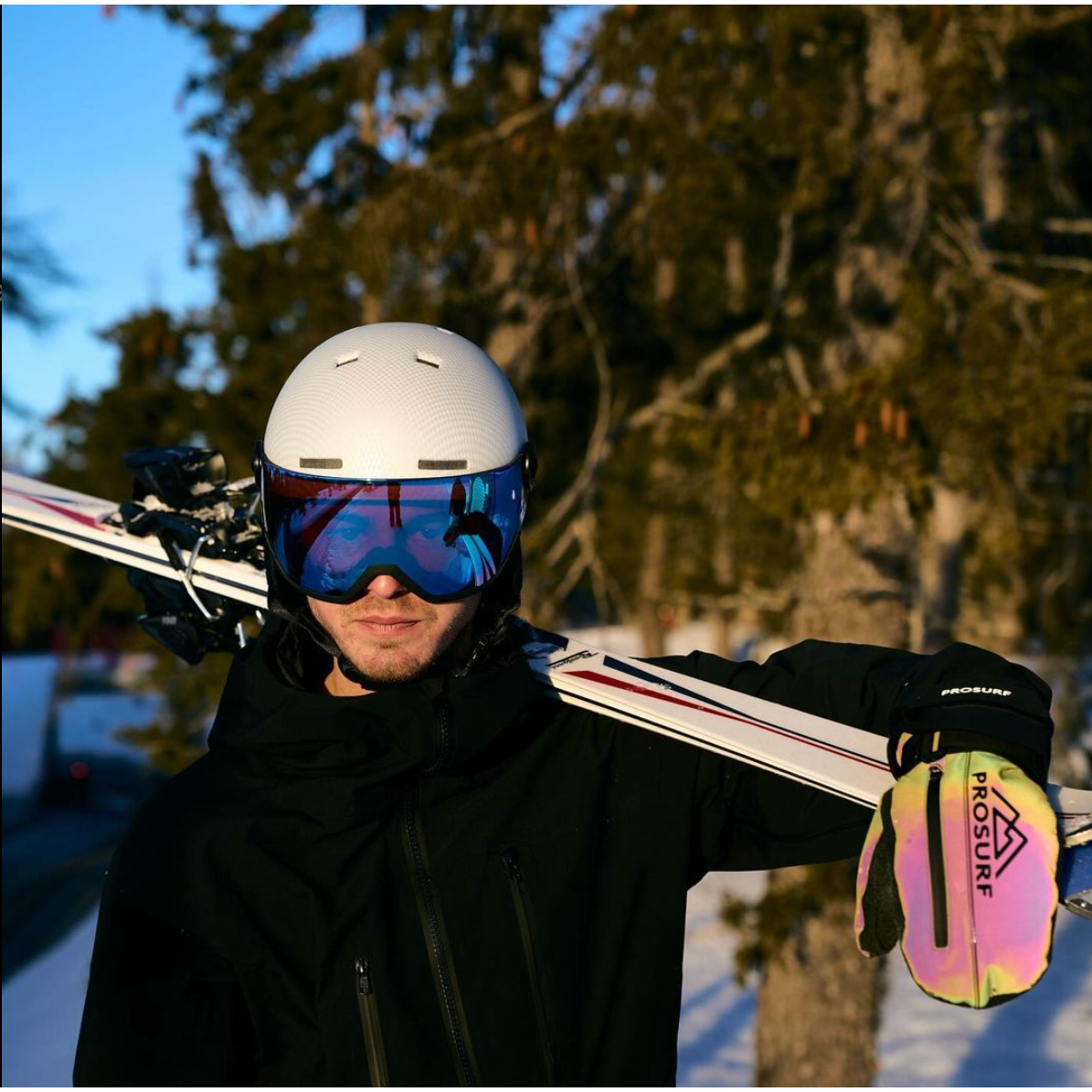
Visor helmet or helmet + goggles: which one to choose?
The short answer. If you wear prescription glasses, if fog ruins your day, or if you want a single, simple piece to put on, get a photochromic visor helmet: the visor adjusts to the light on its own and lifts with a single movement. If you often ski in storms, at high altitudes, or freeride where snow is blowing, the helmet + goggle combo remains more resistant to wind and snow. In both cases, head protection comes from the helmet: ensure it is EN 1077 certified.

Ski and snowboard back protector: which one to choose?
The short answer. For skiing or riding on-piste, a well-fitted, flexible EN 1621-2 certified back protector worn under your jacket is sufficient in most cases. If you are going off-piste, choose a model with a RECCO reflector. If you are jumping in the snowpark or skiing fast, upgrade to a full-body vest that also protects the shoulders and elbows. And for a child, the rule is the same as for a helmet: as early as possible, in their current size.

D3O : comment fonctionne la protection souple qui durcit au choc
Souple au repos, rigide au choc en moins de 10 millisecondes : comment fonctionne le D3O, la matière utilisée dans toutes les protections PROSURF.

MIPS: what it does in a ski helmet
MIPS reduces rotational forces when you fall at an angle. How it works, what it brings and which PROSURF helmets have it.